Agentic computing previews
Quackshell
A CLI and cloud relay that gives remote coding agents temporary browser links to local apps, generated previews, PDFs, videos, and other artifacts.

At a glance
Project Origins
Quackshell came from a practical gap in remote agent work: agents can build useful local things, but the user often gets a description or screenshot instead of the live result.
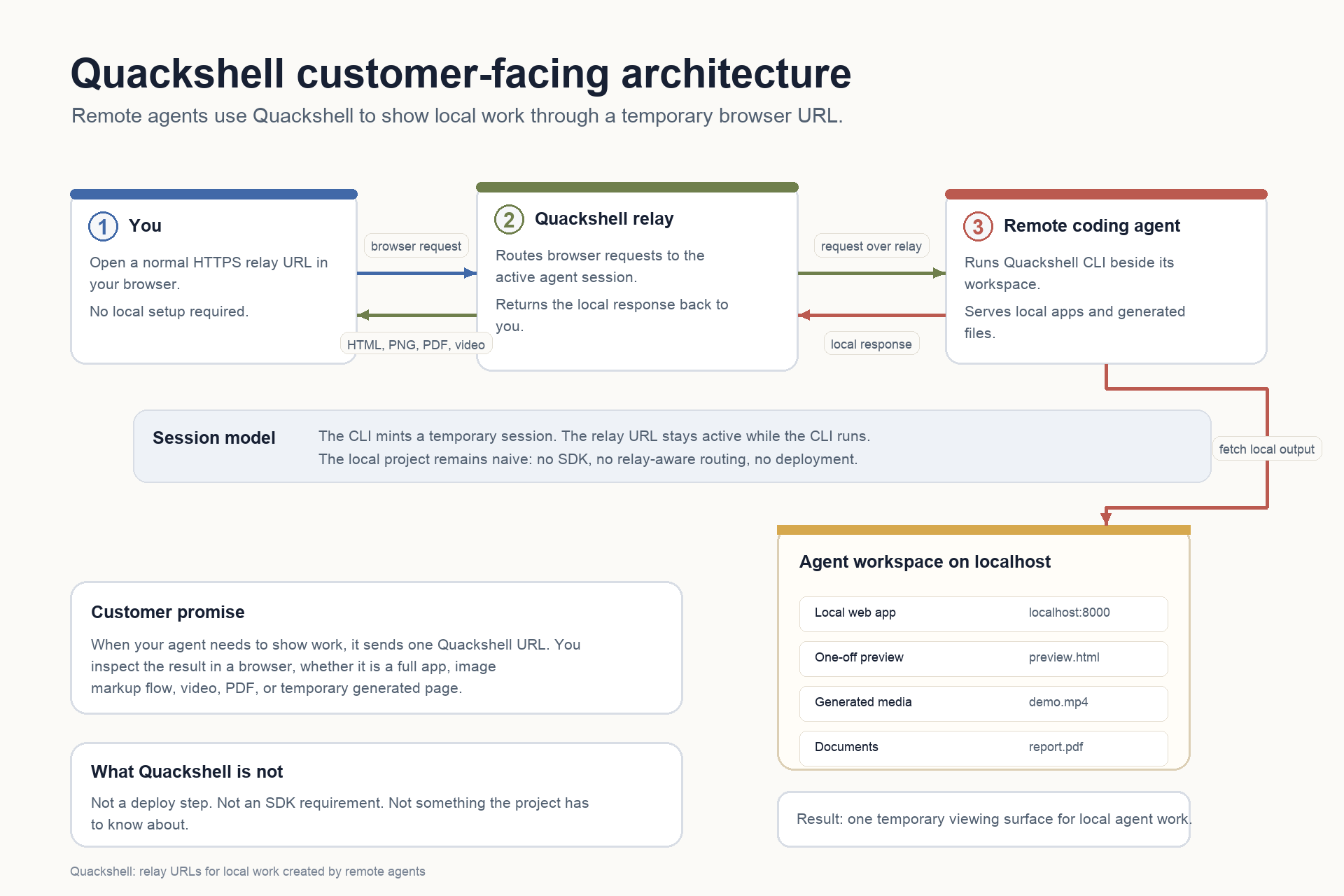
The project is a display channel for that workflow. If an agent can run a local app, generate a static report, produce a video, or serve a file, Quackshell should make the output inspectable through a normal browser link without forcing the underlying project to know about the relay.
Technical Highlights
- Lets an agent expose a local web server through a temporary public URL without adding relay-specific code to the project being previewed.
- Uses a Python CLI to connect localhost to a cloud relay and keep the public session alive only while the process is running.
- Separates the public product website on quackshell.com from service endpoints on quackduck.net.
- Uses signed session IDs so browser-facing requests can route to a live WebSocket connection without a persistent session-routing table.
- Tracks product state separately from routing state through metered tokens, usage windows, and relay deployment environments.
What It Is
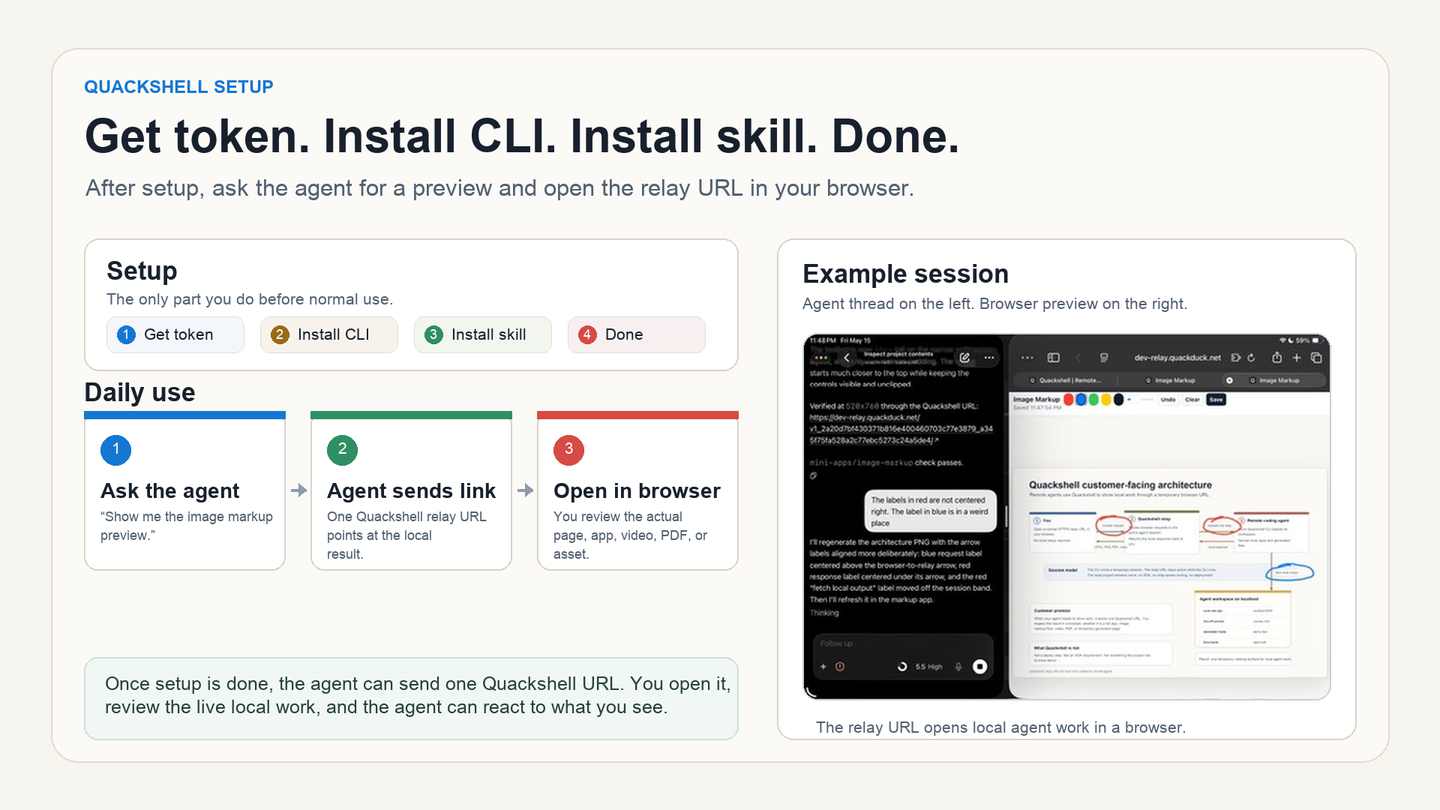
Quackshell is a developer tool for exposing local work through temporary browser links. The common flow is to start a local server, run the CLI with the local port and an API token, and receive a public URL that forwards requests back to localhost while the CLI process remains connected.
The product is aimed at agentic coding sessions where the important output is visual or interactive: a local web app, generated preview, PDF, image, video, documentation build, or one-off report.
Why It Is Technically Interesting
The relay design keeps the local project naive. A preview does not need a Quackshell SDK, custom frontend logic, or special file handling. It just needs to respond on localhost.
The routing model uses a persistent CLI WebSocket connection and a signed public session ID. Browser-facing HTTP requests validate the session, send the request over the live connection, wait for the local response, and then return it to the browser.
Product Surface
The repository includes the standalone Python CLI, relay infrastructure, demo projects, installable agent instructions, and the static quackshell.com product site.
The public site explains the workflow, architecture, alpha install path, and early-access status, while the relay work is split into dev, alpha, and production-oriented service stacks.
Project Images