Visual AI workflow editor
ThreaderGen
A visual graph workspace for building reusable AI generation workflows from connected text, image, script, voice, structured-output, and agent nodes.
At a glance
Project Origins
ThreaderGen came from a practical frustration with content-generation workflows that were trapped inside hard-to-refactor Python code. The work could be automated, but changing the shape of the process was too slow.
The project is an attempt to make that kind of agent-assisted content creation more iterative. Instead of editing scripts every time the workflow changes, ThreaderGen turns the process into a visual graph that can be adjusted, reused, and run again quickly.
Technical Highlights
- Models AI generation work as connected graph nodes instead of isolated prompt boxes.
- Uses typed connectors for text, image, audio, video, structured data, and generated assets.
- Supports reusable subprojects with explicit inputs and outputs, including iteration across array inputs.
- Includes product surfaces for schema reuse, voice catalog management, script nodes, agent nodes, and command-line runs.
- The public site is a static product site with documentation, videos, structured data, YouTube playlist caching, and CloudFront/S3 deployment.
What It Is
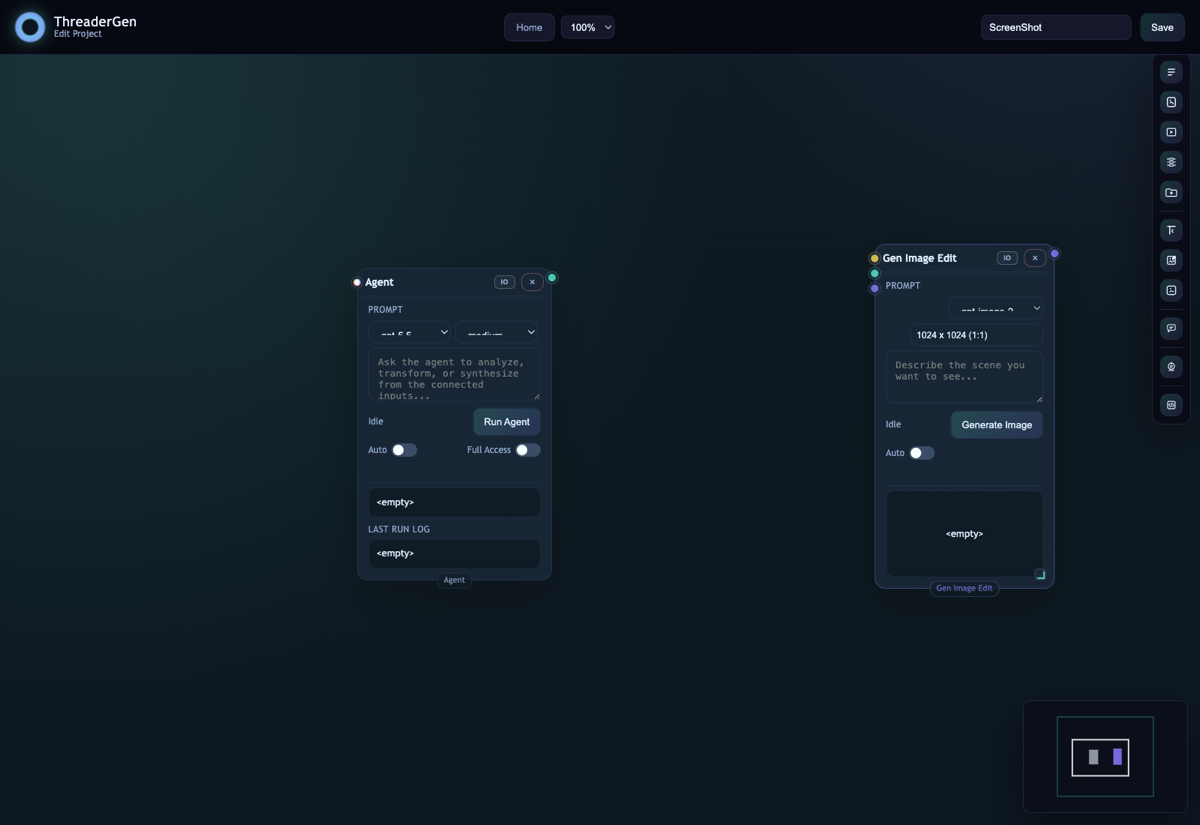
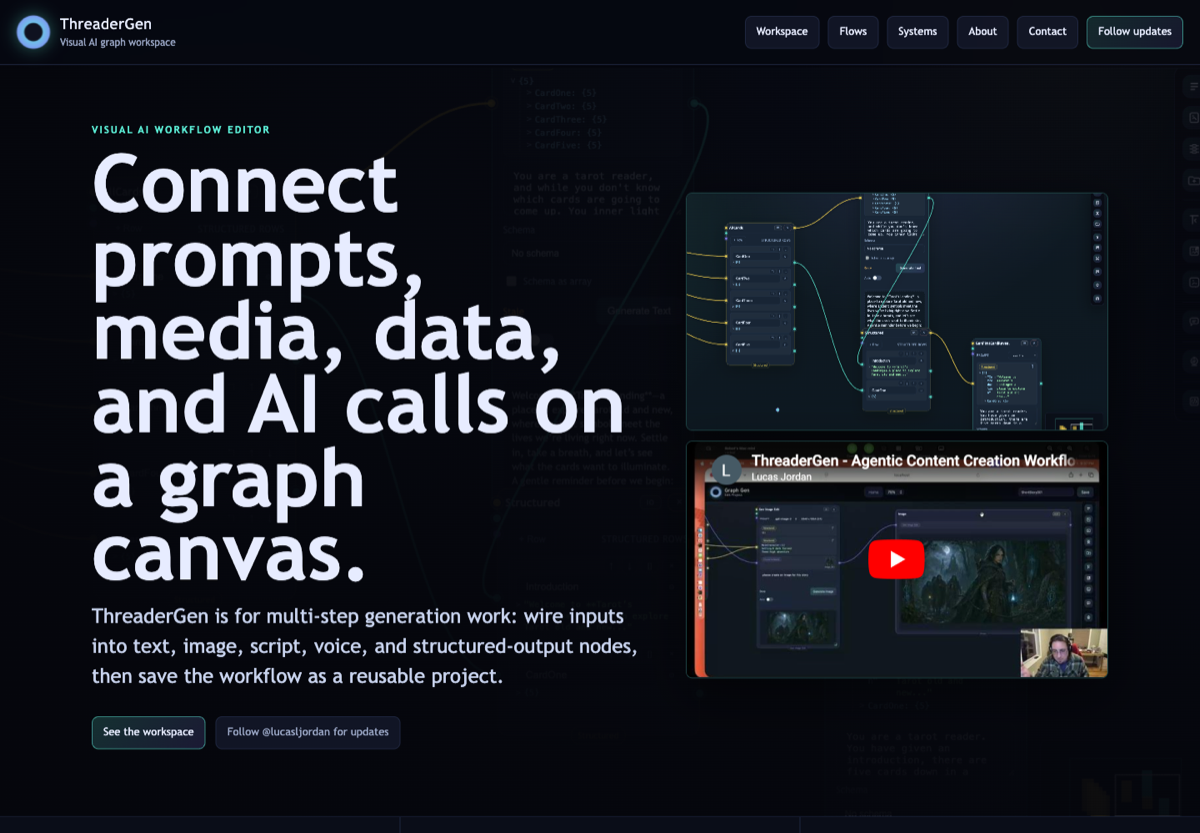
ThreaderGen is a visual workspace for multi-step AI generation projects. The core idea is to make the workflow visible: source material, prompts, model calls, generated assets, structured records, scripts, agents, and nested projects can all be connected on a graph canvas.
The product direction is for work that outgrows one prompt box. A workflow can be built in the editor, saved as a reusable project, and run again through project JSON or from the command line.
Why It Is Technically Interesting
ThreaderGen treats generation as a dependency graph. That creates a natural place to show where each output came from, what depends on it, and how a workflow can be reused or nested inside another workflow.
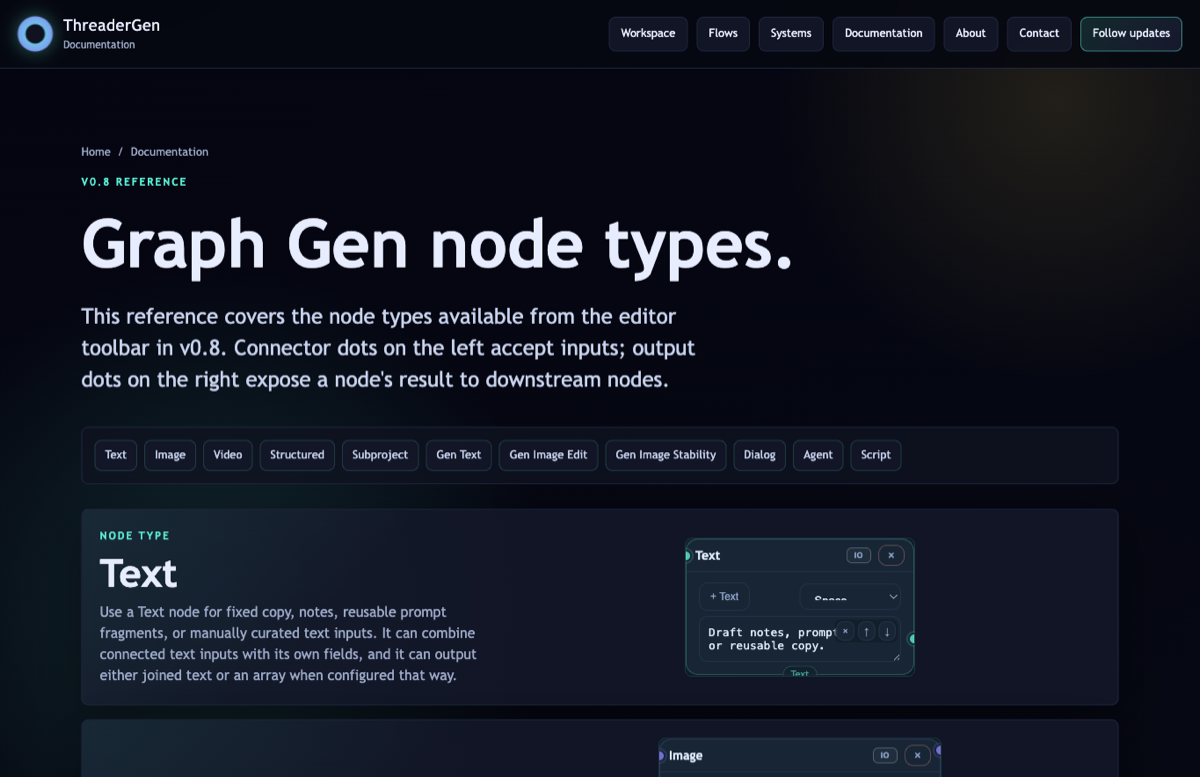
The node model spans several kinds of AI work: text generation, image generation and editing, structured JSON outputs, dialog or voice generation, script execution, agent work, and media inputs. Keeping those pieces typed and visible is the interesting product challenge.
Product Site
The public ThreaderGen site is also part of the project. It publishes the product positioning, node-type documentation, a video archive, contact pages, privacy information, and structured data through a static-site pipeline.
The videos page is generated from a YouTube playlist cache, and the site is deployed as static output behind CloudFront and S3, following the same operational pattern as the other datasite projects.
Project Images